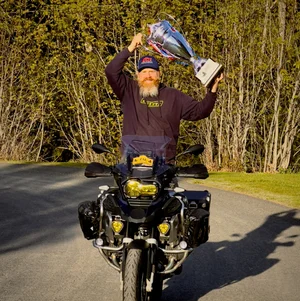
Chasing Legends Arrives: The Yacht Captain Who Built a Motorcycle Empire From Betrayal
Aaron Pufal's debut book launches this month, transforming professional devastation into adventure motorcycling's most ambitious literary project
This month marks the release of Chasing Legends, a book that defies easy categorization and announces a significant new voice in adventure motorcycling literature. Part memoir, part oral history, part meditation on what motorcycle adventure actually means, the manuscript runs across multiple acts and more than twenty chapters. It is the culmination of three years of interviews, tens of thousands of miles of travel, and one man's refusal to let betrayal define his story.
The author, Aaron Pufal, arrived at this moment through an unlikely path.

From Billionaire Fixer to Podcast Host
In 2023, Pufal was managing a special Aspen project that generated forty million dollars in pure profit for the Lauridsen family, a Midwestern billionaire dynasty whose wealth had accumulated through the "compound magic of inherited capital and carefully managed family holdings." After two decades of service as their trusted problem-solver, yacht captain, and what he candidly describes as “…mistress and escort handler, cocaine locator, boys' weekend organizer…” Pufal was abruptly dismissed and short-changed on his promised severance, receiving only a third of what had been promised.

The timing was suspicious. That same month, Rob Sand, Iowa State Auditor and a close relative of the family, announced his run for Iowa governor. Pufal, with his direct access to family secrets and intimate knowledge of their operations, had become a liability. "Opposition research does not discriminate," he writes. "I was a loose end that needed tying up. It was time to clean house, and I was the trash they had decided to take out." Being called "family," he learned, was just another tool the wealthy use to extract loyalty before discarding it.
Rather than seek another position commanding vessels for the wealthy, Pufal conceived the ADV Cannonball Rally and Podcast "out of whole cloth."

Nixon Lauridsen’s yacht in the Exumas, Bahmaas.
A Royal Education
Pufal's credentials for building a motorcycle media empire came from an unlikely source: decades at the helm of superyachts for some of the world's most powerful families. He spent two years captaining a 120-foot tri-deck vessel called Shelelia for Crown Prince Sheikh Mohamed of the UAE.
During those years based in Dubai, Pufal moved through extraordinary circles. He spent time with members of "almost every royal family across the Middle East, emissaries and advisors whose names carried weight in embassies and palaces alike." He shared company with "killers and generals, influential business moguls, politicians who wielded considerable influence over nations' trajectories." There was even a private conversation with the Prime Minister of South Korea.
It was also during this period that Pufal found himself compromised. While applying for US residency through the embassy in Abu Dhabi, he was blackmailed into performing work for "The Agency," a coercive arrangement that left him with few options and fewer illusions about the machinery of power operating behind diplomatic facades.
His maritime career included moments of genuine heroism. On one occasion, Pufal was instrumental in saving people from a burning vessel, the kind of crisis that separates professional mariners from mere boat operators.
Yet the most lasting skill from his years serving the wealthy was not navigation or crisis management. It was an intimate understanding of human psychology, honed through years of "navigating both storms and social hierarchies." That insight now informs his interviews, his writing, and his ability to draw authentic stories from people who have spent lifetimes deflecting questions.

Inside the Book
Chasing Legends begins with Pufal's origin story: the CB750F he rode as a sixteen-year-old in Toronto, the yachting career that took him from Fort Lauderdale to the Middle East, and the betrayal that forced reinvention.
The heart of the book lies in its portraits of motorcycle legends, rendered through extended interviews and Pufal's own reflections on what their stories reveal. And what they revealed surprised him most of all.
"Every legend I chased turned out to be an ordinary person who simply refused to stop," Pufal writes. "That was the most terrifying and liberating discovery of my life."
For readers expecting a straightforward motorcycle book, all torque figures and border-crossing logistics, Chasing Legends delivers something unexpected. Pufal writes with a literary sensibility that elevates the genre, finding poetry in unlikely places.
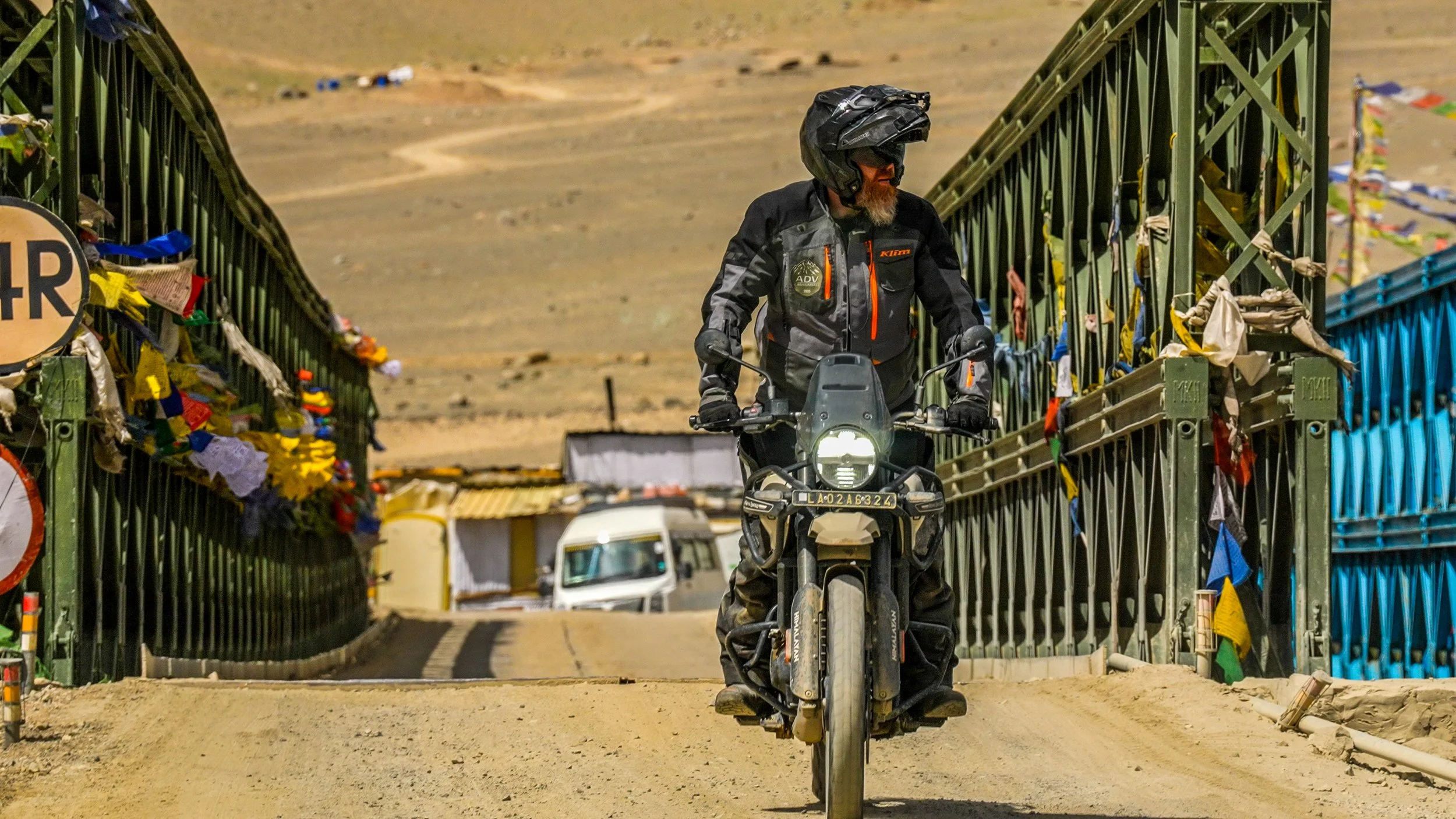
Consider his introduction to the Jeremy Kroeker chapter, written from a houseboat on Dal Lake in Srinagar, Kashmir. Pufal and Taylor Lawson were there as part of an adventure motorcycle expedition through the Himalayas, and as they prepare to record their introduction, the muezzin's call to prayer erupts across the water. Multiple mosques, each slightly out of sync, create what Pufal describes as "a wall of devotional sound" rolling across the mirrorlike surface of the lake.
Taylor asks if they should wait for the noise to subside. Pufal's response: "No. Leave it in. It's perfect."
The scene unfolds with whiskey catching the late afternoon light, the tension of recording in one of the world's most militarized zones just weeks after another terrorist attack, and the delicious contradiction of two Western infidels about to introduce an interview with a Mennonite who rode through the Middle East questioning everything he'd been taught about God.
The passage becomes a meditation on the accident of birthplace and belief, how geography determines faith, how the same devotional impulse that creates beauty also fuels violence. It is writing that earns its place alongside the travel literature it celebrates.
This is not an anomaly. Throughout Chasing Legends, Pufal finds these moments of stillness amid the motion, these reflections that transcend the machinery. The book asks larger questions about identity, belonging, and the stories we tell ourselves about why we keep moving.
The Legends
The book profiles an extraordinary roster of motorcycle world figures. Sterling Noren discusses thirty years of filmmaking at his motel in Bisbee, Arizona. Lyndon Poskitt shares the demands of the Dakar Rally's Malle Moto class, while a separate chapter profiles his father Robin, the retired firefighter whose Yorkshire workshop shaped his son's mechanical genius. Austin Vince traces the DIY origins of Mondo Enduro and Terra Circa. Charley Boorman covers twenty years of the Long Way franchise, and during their conversation an unexpected bond emerged when both men discovered they had help the efforts to defend Ukraine: Boorman with UNICEF, Pufal moving supplies to the zero line and evacuating refugees into Poland.
Claudio von Planta, the cinematographer behind Long Way Round, shares his philosophy on documentary filmmaking forged in war zones: "As a documentary filmmaker, if you end up in prison, you know you're on a good story." Mark Richardson reflects on decoding Robert Pirsig and drinking "Two Buck Chuck" with Ted Simon while fixing a broken Suzuki. Simon himself, interviewed on his 94th birthday, wondered aloud "what motorcycles talk to each other about in the night." Elspeth Beard describes crashing her GS in a distant land, being hospitalized for two weeks, and choosing to repair both herself and the machine rather than abandon the journey. Sam Manicom rode two days to meet Pufal at the Ace Café and revealed he is living on "gifted time" following a kidney transplant.
Joey Evans shares the brutal reality of going from a 10% chance of walking to finishing the Dakar Rally. Jeremy Kroeker discusses faith unravelling across Syria, Lebanon, and Iran. Beau Earnest breaks down the psychology of maintaining triple-digit speeds for 32 hours straight. And chapters on the Blood Bikers and the 59 Club trace how rebellious ton-up boys from the Ace became life-saving volunteers.

The Connective Thread
What distinguishes Chasing Legends from other motorcycle books is Pufal's insistence on revealing the connections between his subjects. Ted Simon inspired Austin Vince and Mark Richardson. Austin influenced Ewan McGregor and Charley Boorman. Charley and Claudio von Planta changed how the world sees motorcycle travel. Their work inspired Lyndon Poskitt, who evolved the art form further.
"The ADV community is smaller than most people realize," Pufal writes, "and the key figures have been influencing each other across fifty years of adventure travel on two wheels."
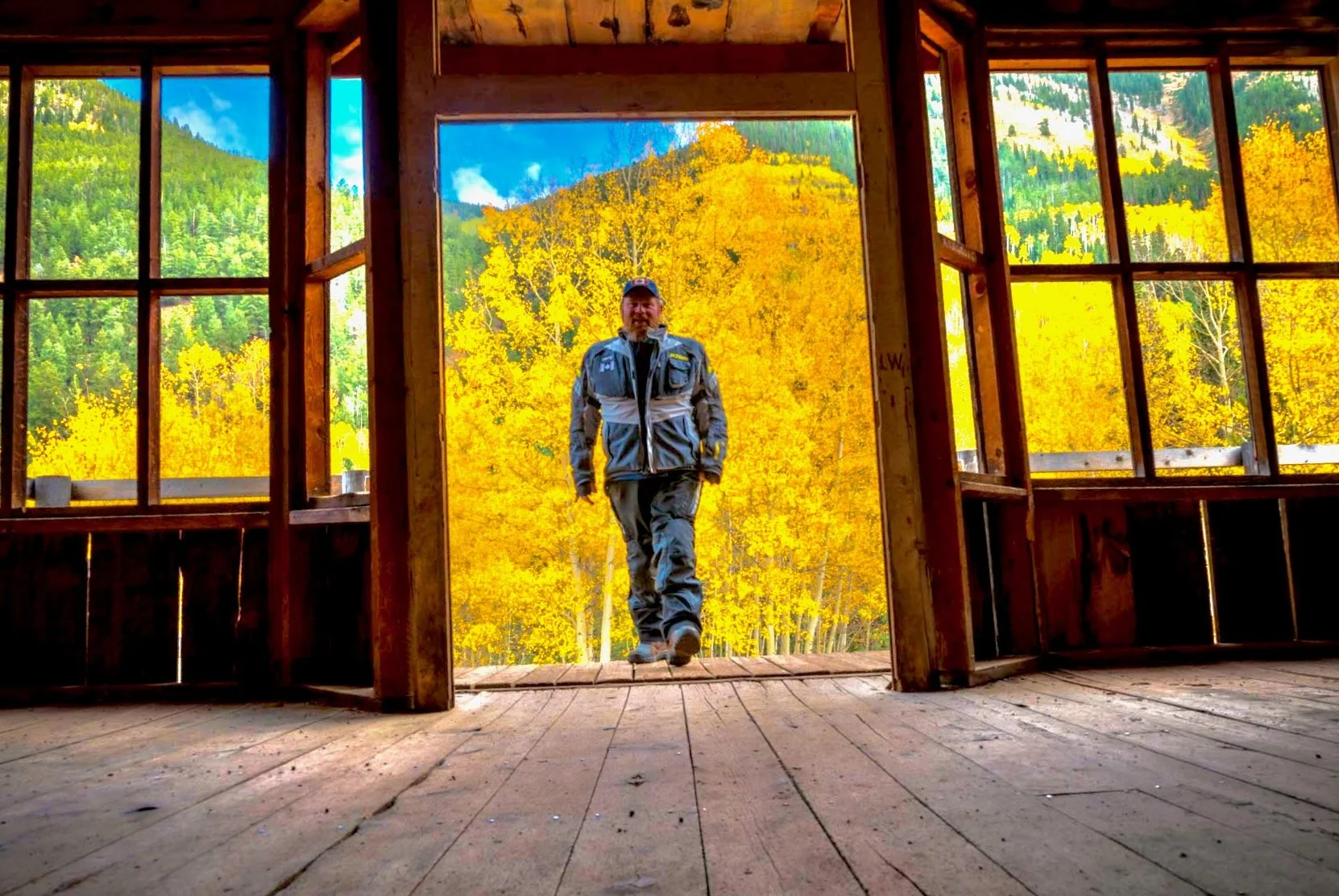
Lauridsen Family Motorcycle Rally - Aspen, Colorado, USA
The Road Ahead
At its core, Chasing Legends is a book about motion. Pufal argues that the pursuit of meaning through movement connects every figure he profiles, whether they are crossing continents on small-displacement bikes, racing the Dakar, or transporting blood through British nights. The motorcycle becomes not an end in itself but a vehicle for something deeper: the search for purpose, connection, and honest living.
For readers who understand that motorcycle adventure is about more than machinery and mileage, Chasing Legends offers something rare: a map of an invisible community, drawn by someone who arrived at its edges through accident and loss, and found his way to its heart through stubborn curiosity.
"The road isn't an escape," Pufal writes in his closing chapter. "It's where life is lived most honestly."
Whether that philosophy came from the motorcycles or the microphone hardly matters anymore. Aaron Pufal has found both, and he is not finished with either.