Real Adventure Bike Crashes And The Gear Choices That Matter
Season 4 - Episode 13
Chad Warner & AndyManCam Crash Debrief
Demons Row: Harley vs Sport Bikes
ADV Cannonball News
Adventure riding sells freedom, but this conversation keeps circling back to a quieter truth: crashes often come from ordinary moments, not hero lines. We dig into two real-world incidents that hit close to home for ADV riders planning BDR routes, the Trans-European Trail, or a coast-to-coast GPS rally like the ADV Cannonball Rally. A gentle-looking surface can hide grease, crusted mud, or calcium chloride, and once traction goes the outcome can be brutal. That’s why motorcycle safety is not just about skill, it’s about expecting the unexpected and setting up your body and your kit for the worst day, not the best one.
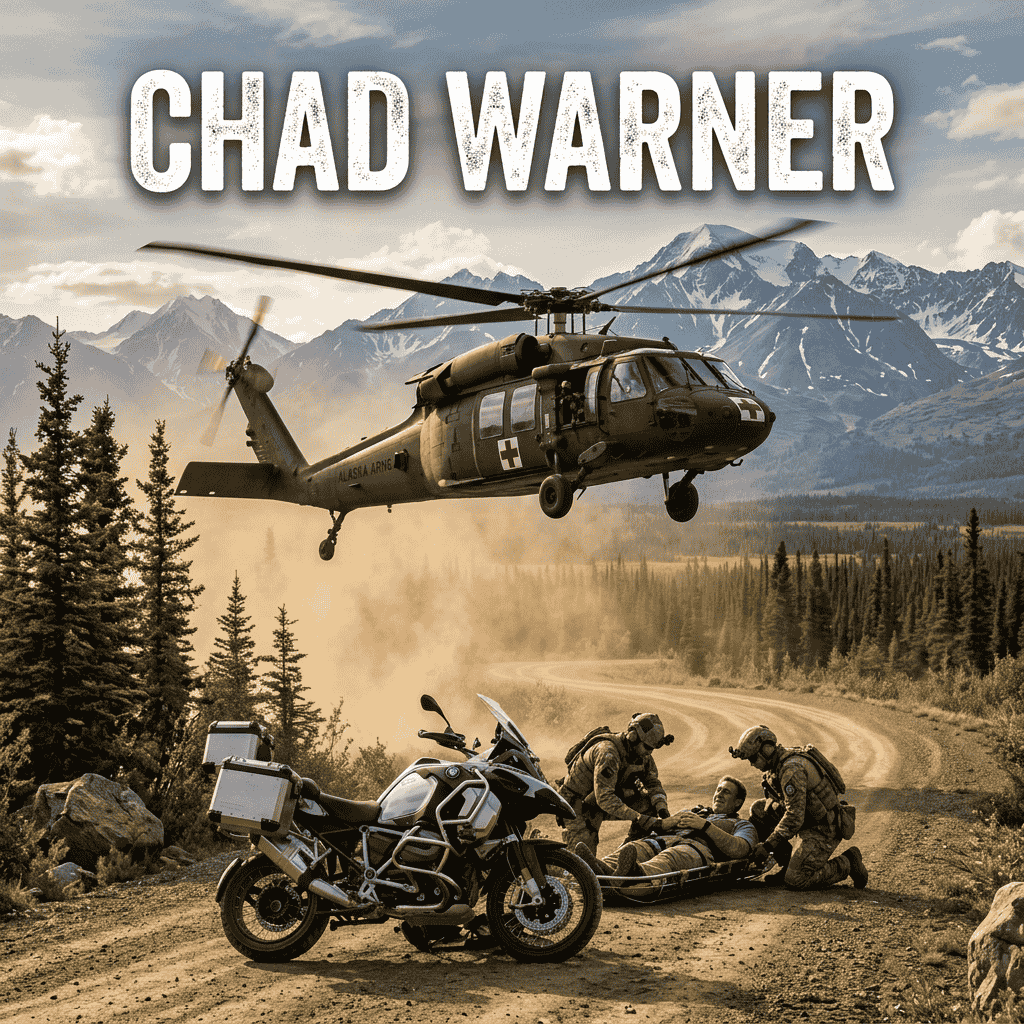
Chad Werner’s story lands hard because it’s the kind of big-trip dream many riders share: Alaska, long distances, changing weather, and construction zones. Past Anchorage, the road treatment used to control dust turns slick when wet, and within seconds three experienced riders go down. Chad ends up with nine broken ribs and a helicopter evacuation, then a massive medical bill that forces real conversations about planning, insurance, and recovery. The key takeaway for adventure motorcycle travel is not that someone rode “wrong,” but that conditions can overwhelm experience. Even with a capable ADV bike and decent tires, there are moments where the only smart move is to slow down early, leave space, and assume the surface is worse than it looks.
Andy Man Cam’s crash is the nightmare version of normal: a low side on an innocuous left-hand curve on a simple fire road section near Valencia while following the Trans-European Trail. He tries to save it with a foot dab, the toe catches, and the lower leg twists into a spiral tibia fracture, a fibula fracture, and a tibial plateau fracture that complicates surgery and stretches recovery. The gear discussion gets practical fast: adventure boots like the Sidi Adventure 2 sit between hiking comfort and real off-road protection, and they may not control the kind of twist that ruins a season. Knee braces can help with hyperextension and some torsion, but they are not magic, especially when the force happens below the knee.
The strongest actionable lesson is communication and rescue planning. Andy keeps his phone on his body and carries a Garmin Montana 700i with inReach, then uses SOS to coordinate help by text while injured and stressed in a different language. That workflow matters whether you ride solo, ride remote, or simply ride beyond cell coverage. From there we zoom out into a gear framework riders can actually use: integrated armour for impact, knee and shin guards for more coverage, hinged guards to limit hyperextension, and full knee braces like Leatt C-Frame or dual-hinge braces for maximum support. Add real off-road training, choose boots with proper bracing, and be honest about bike weight and fatigue. The goal is not fear, it’s longevity: more rides, fewer months lost to rehab.